Early 2D Graphic Designs for PACGA

This document outlines a collection of early two-dimensional graphic design projects created for the Purdue Animation Comic Game Association (PACGA). The primary focus of these works is the development of functional and visually distinct posters and ticketing materials for student events. While the overall design approach occasionally incorporates collaborative digital illustration, the core structural elements rely heavily on typography and strategic textual arrangement to communicate event details effectively to the campus audience.
PACGA Maid Cafe 2019 Promotional Materials
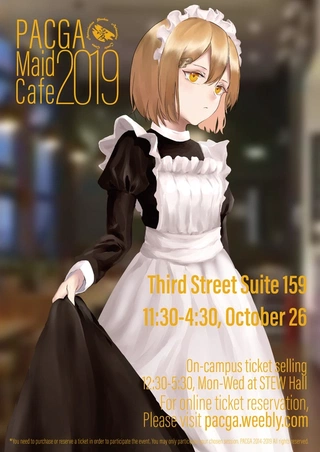
The promotional campaign for the 2019 PACGA Maid Cafe required a cohesive visual identity across both public advertising and physical admission materials. The central poster design features a digital painting of a maid character, created in collaboration with illustrator Zhiyu Cao. The layout utilizes a specific color hierarchy, placing bright yellow and orange typography against the darker, depth-of-field background of the illustration. This contrast ensures that critical event details, such as the October 26 date, the specific time frame, and the Third Street Suite 159 location, remain highly legible. The text placement is balanced around the central figure, guiding the viewer’s eye from the prominent event title in the upper left down to the ticketing logistics at the bottom right. The poster is shown as the featured image of this page.
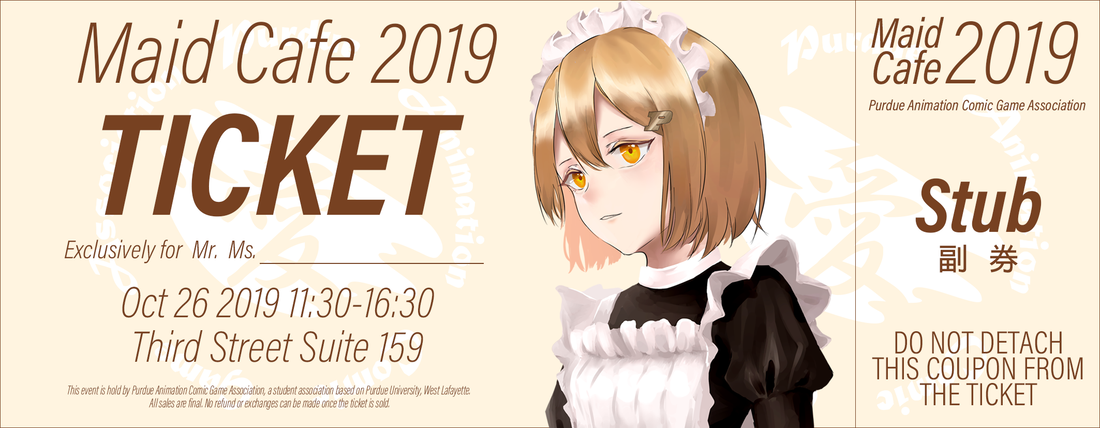
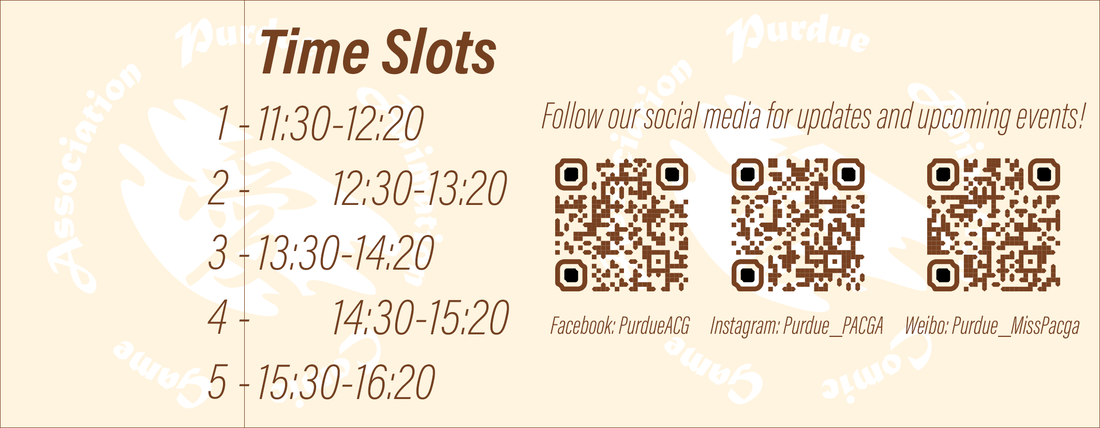
The physical tickets for the same event adapt this visual identity into a functional, handheld format. The front of the ticket maintains the character artwork by Zhiyu Cao but shifts the color palette to a softer cream background with dark brown text, establishing a clearer contrast for printed text. The layout includes structured demarcations for guest titles and a clearly defined stub section on the right edge. The reverse side of the ticket is dedicated entirely to logistical information, organizing five distinct one-hour time slots for the cafe sessions. Additionally, the back layout incorporates a row of three QR codes linking to the organization’s social media presence across Facebook, Instagram, and Weibo, providing attendees with immediate access to future updates.
Typography-Driven Recruitment Design
A separate project for PACGA involved creating a recruitment poster designed specifically to capture the attention of the anime enthusiast demographic. This piece heavily references the iconic typographic style of the anime series Neon Genesis Evangelion. The design discards traditional pictorial elements in favor of a dense, high-contrast arrangement of sharp white text on a solid black background.
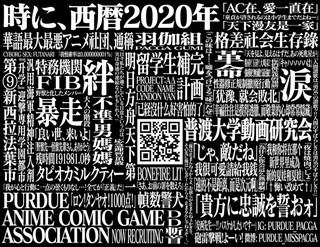
The composition integrates various recognizable anime quotes, community inside jokes, and organizational information arranged in intersecting horizontal and vertical alignments. The alternating font sizes, weights, and varying text orientations create an overwhelming visual density. This approach serves a specific functional purpose: it acts as an immediate cultural signal to the target audience familiar with the source material while creating a striking geometric pattern that stands out on crowded campus bulletin boards. A central QR code is embedded directly within the typographic grid, integrating the primary call to action without disrupting the established aesthetic framework.
